Tag Archives: Resurrection

Who moved the stone?

Horsham: 27th March 2026

In my last post, we were reflecting on the burial of Jesus in a garden tomb owned by Joseph of Arimathea, a member of the Jewish council, who placed a large stone across the entrance to the tomb. We noticed that the Jewish leaders were in no doubt that the body was still in the grave when the Roman soldiers or temple guard arrived to secure the tomb. 

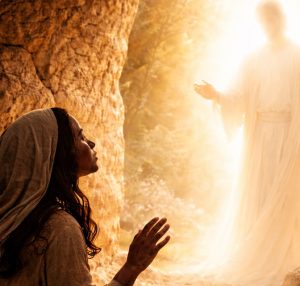
Around dawn on the Sunday morning Mary Magdalene, some of the other women, and then the disciples, discovered that the stone had been moved and the tomb was now empty.

‘Early on the first day of the week, while it was still dark, Mary Magdalene went to the tomb and saw that the stone had been removed from the entrance.John 20:1

So, our next reflection is, who moved the stone?

The stone has been rolled away
The Sabbath lasted from 6pm on Friday evening until 6pm on Saturday. By that time it was dark, so it seems entirely reasonable that the women waited until dawn on Monday before heading to the tomb to anoint the body for burial. Mark’s Gospel tells us that as they approached they were anxious. ‘They had been saying to one another, “Who will roll away the stone for us from the entrance to the tomb?” ‘(Mark 16:3) As we know, by the time they arrived, the tomb was opened – the stone had been moved. By who? How?

who moved the stone?

The Guards Story
There’s no indication that, when she arrived at the tomb, Mary encountered the guards. In fact, by the time Mary was arriving at the tomb, the guards were in the city, throwing themselves on the mercy of the Jewish leaders. We are left to assume that these soldiers were the source of the story which comes to us in Matthew’s Gospel that in the early morning there had been a violent earthquake, during which an angel appeared and rolled away the stone. Since none of teh other gospels mention the earthquake, it seems likely that whatever happened was localised – confined to the area of the tomb itself. In their terror, the guards were unable to move and became ‘like dead men‘. (Matthew 28:2-4). Whatever happened, these hardened men were sufficiently terrified to abandon their post and admit that they had lost the body.

The Jewish Leaders Version
The Jewish leaders would have been horrified when they heard the story of the guards. Jesus had spoken about his resurrection, and their greatest fear was that stories that he had risen would start circulating. Their solution is crude. Bribe the guards to tell a different story – that the disciples had broken in and stolen the body. We saw in the last post that the leaders broke their own commandments by violating the sabbath. On hearing the story of the guards, we now see them indulging in bribery, deceit and lies to control the narrative

12 When the chief priests had met with the elders and devised a plan, they gave the soldiers a large sum of money, 13 telling them, “You are to say, ‘His disciples came during the night and stole him away while we were asleep.’ 14 If this report gets to the governor, we will satisfy him and keep you out of trouble.” 15 So the soldiers took the money and did as they were instructed. And this story has been widely circulated among the Jews to this very day.’ (Matthew 28: 12-15)

The Women’s Version
We’ve already noted that from Matthews’s version, we can assume that the guards were in the city by the time the women arrived (Matthew 28:11). There is no mention of the story of the guards in the other gospels, which rather affirms that neither the women or the disciples witnessed either the earthquake or the supernatural removal of the stone. It’s probable that they knew nothing about the guards or their story. We have already noted the concerns of the women on the way to the tomb about how they could remove the stone, yet by the time they arrived, the tomb was open and accessible.

Who moved the stone
In our last post we noted that the actions of the teachers of the Jewish leaders tend to support the idea of resurrection which they sought to deny. Now, we notice that the only explanation of the removal of the stone is provided by the guards. Who moved the stone? The guards offer an answer. Their testimony is that the ground shook, and they witnessed the stone being moved by an angel. They were sufficiently frightened to abandon their post (a decision which could have brought them the death penalty) and rush into the city.

End Piece
So, who moved the stone? Let’s assume for one moment that the story of the removal of the stone which is attributed to the guards is correct. This would mean that the first witnesses to the resurrection of Jesus were not the disciples, or the women, but the guards.

Everyone involved in this story, the women, the disciples, the Jewish leaders, and obviously the guards, believed that something extraordinary, something supernatural, had happened. Yet it was the Jewish leaders, in their determination to discredit Jesus, who paid generously for the silence of the guards, and to promote a false narrative, that the body had been stolen. Once more, the actions of the leaders of Israel tend to support the truth of the resurrection.

Richard Jackson: Horsham,West Sussex


Securing the Tomb: Matthew 27:62-66

The Guard at the Tomb

62 The next day, the one after Preparation Day, the chief priests and the Pharisees went to Pilate. 63 “Sir,” they said, “we remember that while he was still alive that deceiver said, ‘After three days I will rise again.’ 64 So give the order for the tomb to be made secure until the third day. Otherwise, his disciples may come and steal the body and tell the people that he has been raised from the dead. This last deception will be worse than the first.”

65 “Take a guard,” Pilate answered. “Go, make the tomb as secure as you know how.” 66 So they went and made the tomb secure by putting a seal on the stone and posting the guard.

Matthew 27:62-66

Horsham: 25th March, 2026

This is the first of my reflections on the resurrection of Jesus. Before looking at the resurrection experiences, I found myself thinking about the burial of Christ. For the resurrection to be true, it’s critical that the body of Jesus was still inside the tomb by the time the grave was secured by the Roman soldiers. I think that this passage gives us confidence that this was the case.

This part of the story appears only in Matthew’s Gospel, but we’re going to see that it fits perfectly in stories of the death and burial of Christ in all the Gospels. As ever, we need to get into the context of the reading. The first three words are really important.  ‘The next day…’.

Let’s look at some context.

Jesus is Dead
Jesus died on Friday at around 3pm in the afternoon (Matthew 27:46) The Jewish day starts and ends not at midnight, but at 6pm. The sabbath starts at 6pm on Friday afternoon, by which time all of the Jewish characters in this story should be at home, observing the sabbath commandments. Lots of things happen between 3pm and 6pm.

At some point, after the first shock of witnessing the brutal death of Christ, after the long period of darkness and the last agonised cry (Matthew 27: 45-50),  after the earthquake, the torn curtain in the Temple, and extraordinary supernatural events (Matthew 27:51-53), Joseph of Arimathea goes to Pilate and asks for the body of Jesus.

Pilate will then have sent someone to check that Jesus was actually dead (Mark 15:44). We know that one of the soldiers pierced the side of Christ (John 19:34). These people knew about death. We should not be in any doubt: Jesus was dead. Pilate released the body. The distance between Golgotha and Pilate’s palace was not great, but nonetheless, this process, carrying of messages backwards and forwards, took some time. In this passage, time matters.

Jesus is Buried
We know from that Joseph goes with Nicodemus to Golgotha and takes possession of the body of Christ. They take Christ to the new tomb and prepared him for burial (John 19: 38-42) before rolling the stone across the mouth of the tomb (Mark 15:46) and heading home in time for the start of the sabbath. At 6pm, the disciples, the women, Joseph and Nicodemus, will be at home, observing the sabbath. Mary Magdalene watched as the tomb was closed (Matthew 27:61), and then herself headed home for the start of the sabbath.

Guarding the Tomb
Whatever we might think of the Jewish leaders, they were not stupid. We’ve already mentioned that Mary watched as a large rock was placed across the entrance. Now I’m speculating (by which I mean that this isn’t reported in the Gospels) when I say that it seems inconceivable that the Jewish leaders did not also have someone standing, watching what was going on. They would want to be in no doubt where the body had been placed, and would surely they  ensure that someone kept watch while they rushed off to Pilate to ask for military guard.

So, back to those first few words of this section. ‘The next day, that is after the day of preparation, the Chief Priests and Pharisees gathered before Pilate.’

Breaking the Sabbath
I want you to notice two things. First, the ‘day after the day of preparation’ can only mean that this happened after 6pm, on the Sabbath. Second, that means that the Jewish leaders were breaking critical rules of their own Law by visiting the gentile Roman Consul after 6pm on the Friday – because it is now the Sabbath. 

‘If they did that,it is clear to see how radically they broke the sabbath law.’  (Wm. Barclay, ‘Gospel of Matthew, Vol 2,  St Andrew Press, p437)

If they were sufficiently desperate to take that risk, it is once again inconceivable that they had not taken the precaution of sending someone to sit in the garden and keep an eye on the tomb.

Pilate authorises the guard, who are deployed to keep watch over the tomb. They return to the garden, with the guards. It could be as late as 7pm or 8pm on the Sabbath. It seems to me that they know that the body is still inside, because they have been watching. With full confidence that the body of Jesus is still within, they seal the tomb (Matthew 27:66).

End Piece
When the body was later found to be missing, the Jewish leaders bribed the soldiers to tell a story that the body had been stolen during the night. Importantly, they never allege that the body was stolen before the guard arrived. Surely this because they knew that the body was still there in the tomb when the guard arrived. They knew that Christ was inside that tomb when they, themselves, placed their seal on the tomb.

It is the Jews themselves who made sure that the tomb was secure. 

In their determination to prove that Jesus would not rise from the dead, the Jewish leaders inadvertently add weight to the supposition that he did.

Unpick this part of the story and we should be in no doubt. Christ was dead. Christ was buried. His body was secure in the grave, sealed and guarded by a squad of Roman soldiers.

‘They had not realised one thing.- that there was not a tomb in th eworld which could imprison the risen Christ. Not all the plans in the world could bind the risenn Lord. Anyone who seeks to put bonds on Jesus Christ is on a hopeless assignment.’ (Wm. Barclay, ‘Gospel of Matthew, Vol 2,  St Andrew Press, p438)

Richard Jackson: Horsham,West Sussex


Resurrection: Believe it or not

Horsham: 24th March 2026
Resurrection: Believe it or not


Since completing my journey through Mark’s Gospel, I’ve spent the last couple of months reflecting on the resurrection. My next few posts will be the start of a series of reflections which explore the evidence of the resurrection as we find it in the Gospels and Acts of the Apostles.

We could probably agree that the story of the resurrection of Jesus is central to Christian faith. It is at the core of the Gospel. If you take away the resurrection, you are left with very little. Jesus is reduced to a mere historical figure, a good man who lived, and died 2000 years ago. Without resurrection, Christian faith isn’t just diminished, it falls apart. The Apostle Paul writes, ‘If Christ has not been raised, your faith is futile, and you are still in your sins.’ (1 Corinthians 15:17). 

So let’s think about the resurrection. Along the way, we will need to make a choice. The empty tomb. Resurrection? Believe it or not.

Richard Jackson: Horsham,West Sussex


Resurrection: Mark 16:1-8

‘The resurrection is not the epilogue to the Gospels, it is the climax of the life of Christ.’   John Macarthur

16 When the Sabbath was over, Mary Magdalene, Mary the mother of James, and Salome bought spices so that they might go to anoint Jesus’ body. Very early on the first day of the week, just after sunrise, they were on their way to the tomb and they asked each other, “Who will roll the stone away from the entrance of the tomb?”

But when they looked up, they saw that the stone, which was very large, had been rolled away. As they entered the tomb, they saw a young man dressed in a white robe sitting on the right side, and they were alarmed.

“Don’t be alarmed,” he said. “You are looking for Jesus the Nazarene, who was crucified. He has risen! He is not here. See the place where they laid him. But go, tell his disciples and Peter, ‘He is going ahead of you into Galilee. There you will see him, just as he told you.’”
Trembling and bewildered, the women went out and fled from the tomb. They said nothing to anyone, because they were afraid.[a]

Mark 16:1-8

Horsham: 26th January 2026

In my last post, I commented that in these last verses of his Gospel, Mark brings the women to centre stage. This is unusual in an account of events of this period, and it’s a great moment to remind ourselves that as far as we can tell, the source for Mark’s Gospel is the Apostle Peter. In these closing verses of Mark’s gospel, continue to be absolutely critical to the story.

Matthew tells us that many women who had been following Jesus were there at his death. Mark tells us that Mary Magdalene and Mary the mother of Joseph were there as Joseph of Arimathea and his servants laid Jesus to rest in the tomb, sealing it with a large rock. The interesting thing is that this account seems to rely on the testimony of the women, who later told their story to Peter.  This is important because first century Palestine was a fiercely patriarchal society in which Jews rarely gave credence to women as witnesses. Yet it was the women who stood close to the dying Jesus, when Peter and the other disciples are either in hiding or keeping their distance, and it is the women who are recorded as the witnesses to the placing of Christ in the tomb.   

So here we are on the third day. The first people to visit the tomb are not the men who had sworn to stand with Christ even when he is faced with death. The first visitors are the women. With the men in hiding, we sense that the women are taking an extraordinary risk by approaching the grave. If we reflect on the account in all four Gospels, we might reasonably think that they have arranged to meet at the tomb in the early morning of Sunday, the third day. They come with expensive ointments and spices to adorn the body, not as a preservative, but as an entirely human act of love for Jesus. As they approach the tomb they are anxious, not as you might think about arrest, but about how they will move the rock which has sealed the tomb. 

John tells us that it is Mary Magdalene who arrives first, possibly alone. To her horror, she finds the tomb open. Someone, or something, has rolled the stone away.  Grave robbers were common, raiding tombs in search of valuables which might be left with the dead. Mary’s reaction is entirely reasonable – that the body of Jesus has been stolen. She rushes away to tell the disciples. Next to arrive are another group of women who are the first to venture inside the tomb and find it empty. By Mark’s account, which again can only originate from one of the women, there was a moment of confusion. They were perplexed, as well they might be. In that moment, like Mary before them, they can surely have but one thought, that someone has stolen the body. 

Then, something extraordinary happens. Stepping inside the tomb they are confronted by a young man sitting to one side where they would have expected to see the body of Jesus. ‘You are looking for Jesus of Nazareth. He has been raised; he is not here. Look – here is the place where they laid him. Go and tell his disciples and Peter that he is going ahead of you to Galilee. There you will see Him, just as he told you.’ (vv 6-7 NRSV). 

He has been raised. Resurrection.

End Piece
Mark’s Gospel ends at verse 8. Because we know more about his resurrection from the other Gospels, it seems a rather abrupt end. You will see in your Bible that there are 12 more verses, but you will almost certainly see a footnote which says that these verses do not appear in the oldest and most reliable manuscripts.

I will look at these extra verses in my next post, but for the moment, let’s regard verse 8 as the final verse of the Gospel. In that verse we see the women running from the tomb. In my English bible it says that they were running in fear and amazement. If we were watching a film, this ending would make us think that there is going to be a sequel. There is more to come.

The resurrection is indeed the climax of the life of Christ on earth. it is also the start point for the 40 days of resurrection during which Christ was seen by his disciples, and by many other followers of Jesus (1 Corinthians 15:3-8).

The fact that Peter is the principal source for Mark makes this ending even ore special. The final action of Mark’s Gospel focuses not on the disciples, but on the women and their reaction to the missing body. The first people with the courage to visit the tomb, the first witnesses of his resurrection. The first people, in fear and amazement to bring the news of the resurrection of Jesus Christ of Nazareth. to the disciples, and to the world,  were the women.

For myself, I think that is a wonderful way for Mark to end his incredible story.

Richard Jackson, West Sussex

Whose wife is she anyway? Mark 12: 18-27

Who’s wife is she anyway!

Marriage at the Resurrection

18 Then the Sadducees, who say there is no resurrection, came to him with a question. 19 “Teacher,” they said, “Moses wrote for us that if a man’s brother dies and leaves a wife but no children, the man must marry the widow and raise up offspring for his brother. 20 Now there were seven brothers. The first one married and died without leaving any children. 21 The second one married the widow, but he also died, leaving no child. It was the same with the third. 22 In fact, none of the seven left any children. Last of all, the woman died too. 23 At the resurrection[a] whose wife will she be, since the seven were married to her?”

24 Jesus replied, “Are you not in error because you do not know the Scriptures or the power of God? 25 When the dead rise, they will neither marry nor be given in marriage; they will be like the angels in heaven. 26 Now about the dead rising—have you not read in the Book of Moses, in the account of the burning bush, how God said to him, ‘I am the God of Abraham, the God of Isaac, and the God of Jacob’[b]? 27 He is not the God of the dead, but of the living. You are badly mistaken!”

Mark 12: 18-27

Moreton, Dorset: 6th June 2025

We can’t help noticing as we read chapters 11 and 12 of Mark’s gospel that most of the major groups of first century Israel, religious and political, have come together into an uncomfortable coalition to take down this Jesus. First, it was the temple leaders, sent in like the advanced guard to catch him out. Jesus publicly humiliates them. Then it was the unlikely joint battalions of the Herodians and the Pharisees. Their attempt to catch Jesus out was no more successful, and they retired from the field bruised and silenced.

Next, onto the battle field come the Sadducees. We tend to think of them as a minor sect. In reality, they were important and influential in first century Judaism with a strong presence in the Sanhedrin. For them, Scripture was the Pentateuch – the first five books of what we call the Old Testament. They rejected oral tradition, and did  not regard the rest of Hebrew Scripture as the Word of God.  They  famously rejected, amongst many other things, the idea of resurrection. It’s  not surprising, perhaps, that their question is based specifically on the Law (Deuteronomy 25:5-6) with a focus on  the subject of resurrection. Sent into battle, their question is intended to catch Jesus out. If he denies the teachings of Moses, he will be guilty of blasphemy. For them, blasphemy is punishable by death.

Here’s the background. According to the Law, where brothers are living together, they have a particular family responsibility to fulfil. If such a married man dies, his brother shall takes the widow as his wife. Any children born from that second union will be counted as children of the dead brother, ensuring the continuity of his family line. This may sound strange in our ears, but it was a means of providing for the widow and her children, and of maintaining the family name. It created a strong family bond.

Like the Herodians, the Sadducees approach Jesus  with flattery, addressing Jesus as ‘Teacher’. They then set out some circumstances which they would like him to consider. Rabbi’s are expected to answer ‘tricky’ questions. about Scripture. It’s what they do.

In this case, the circumstances are intended to catch him out. A woman married a man who is one of seven brothers. When he dies, she marries the first brother. That brother dies. You get the picture. Eventually, all seven brothers die. Each of them has spent time as husband of this woman, but she has remained childless. And here’s the catch. When the resurrection comes, whose wife will she be?

Their intent is to make a mockery of the concept of resurrection. Such a matter cannot be properly resolved in the next life. The poor woman would, after all, have seven husbands.

Maybe there was a pause. A moment of silence. A moment of anticipation. The Sadducees, perhaps, start to think they have caught Jesus out. The Law of Moses, they want to say, simply isn’t compatible with your idea of resurrection. To allocate the woman to one brother at the resurrection, would undermine the other six. If Jesus, on the other hand, denies the resurrection, he undermines Jewish teaching and his own. Either way, they will be able to turn the crowd against Jesus and arrest him.

His response was not what they expected.

‘Your question demonstrates that you have no idea what you are talking about!’ The Good News translation says simply, ‘You are wrong!’

Jesus response is in two parts. Firstly, he tells them that in the resurrection we will be like the angels. The very concept of marriage will be redundant.   Resurrection is real, says Jesus, but life will not be as we experience it in this world. God can do this. His power is supreme.

Secondly, Jesus was saying that they have misunderstood even the part of Scripture which they accept and teach. When Moses approached the burning bush (Exodus 3), God declared himself to be the God of Abraham, Isaac and Jacob. As written, the language says that these people are not dead. They are alive. Of course, they have left this earthly life.   They are resurrected. (This is well within the power of God! We remember that two of the disciples saw both Moses and Elijah at the Transfiguration of Christ).

Far from undermining the Law of Moses, in his response Jesus has affirmed it, whilst challenging them for not fully understanding it. The Sadducees are in something of a fix. They know well that the word of God at the burning bush in Exodus 3 is used to affirm the existence of a resurrection, but in coupling this line with the news that the repeatedly widowed woman will not need a husband in the resurrection offers them little scope for supplementary questions.

To be firmly and publicly told that they are wrong is undermining. To be told by this young rabbi that they don’t understand their own Scripture is embarrassing. In the face of the packed Passover crowd, they are humiliated. They withdraw to lick their wounds.

 End Piece

There is reassurance in this story.  Firstly, in Christ’s affirmation that resurrection is a thing. Secondly, he affirms that the constraints, rules and privileges of this world do not carry over to the next.

Yet there’s a warning here too. Be careful, says Jesus, how you handle Scripture. Picking out the bits which suit the agenda of your own Church, sect or party is dangerous. Picking and choosing the bits you want and disregarding others is manipulative. It is, in effect, making up your own religion. It is wrong.

And before you point a finger at the Sadducees and cry ‘hypocrite’, look to yourself. It’s great to learn Scripture. I love to hear people quoting Scripture – especially when they do it accurately! But it’s easy to take a verse out of context and build a whole philosophy around it which was never intended.

Scripture was, and sadly sometimes still is, mis-used to justify slavery, misogyny, racism and homophobia.

Using Scripture comes with a heavy responsibility. Just be careful. Lest the finger of the Living Jesus points at you and says – ‘You have misunderstood. You are wrong!’

Richard Jackson, West Sussex: LifePictureUK

The Ascension of Jesus: Luke 24: 50-53

The Ascension of Jesus

50 When he had led them out to the vicinity of Bethany, he lifted up his hands and blessed them. 51 While he was blessing them, he left them and was taken up into heaven. 52 Then they worshiped him and returned to Jerusalem with great joy. 53 And they stayed continually at the temple, praising God.

Luke 24:50-53, NIV

Horsham, 9th May 2024

You probably didn’t hear this on the news today or pick it up on social media, but today is Ascension Day.

When I was a child, my entire primary school were marched down the road to the village Church for the Ascension Day service. That almost certainly wouldn’t happen today.  Whilst it’s a really important date in the Christian calendar, I’m kind of disappointed that relatively few Christian Churches will be celebrating it today.

So, what is Ascension Day and why is it important to me? Let’s start with a bit of important context.

Good Friday

Jesus was crucified a Friday morning just before the start of the Passover festival in Jerusalem. His death was hugely dramatic, and restored the relationship between mankind and God. Because of his death on the cross, Jesus offers salvation to eternal life for those who believe in Him as the Son of God (John 3:16). In spite of the absolute horror of execution by crucifixion, Christ’s death opens the opportunity of a right relationship with God (which is a good thing) so we call that day ‘Good Friday’. You can read the story of His death in Luke 23: 26-49.

Easter Day

Good Friday, then, commemorates the day of Christ’s death. We regards the Friday as the first day of his death. The Saturday, the second day, was regarded as the Sabbath. Jesus’ friends could not visit his tomb to anoint the body on the Sabbath, so they went there at dawn on the Sunday, the third day. You may remember the story, that when they arrived, the large stone which had covered the entrance to his tomb had been rolled away and the body was gone. You can read the events of that extraordinary day in  Luke 24The eyewitness accounts speak of the risen Jesus.  Jesus rose from the dead on the third day – the Sunday – which we celebrate as Easter Day.

‘The disciples didn’t need to see Him rise, because they saw Him risen.’ (i)

Resurrection

The story of the Gospels is that the death of Jesus was not the end. The risen Jesus is seen by his disciples repeatedly after his death over a period of 40 days. We call this the period of his resurrection. Resurrection means ‘raised from the dead’. He appears to his friends and disciples. This isn’t a vague ghostly apparition. Jesus talks to them. He allows them to touch him and even eats with them. He speaks to them in ones and twos, and sometimes in much larger groups (see 1 Corinthians 15:3-8).

Ascension

40 days after his resurrection he leads them out to a hilly area just outside Jerusalem, above a village called Bethany. Jesus, we read, lifted his hands in blessing over his disciples, and as he does so, he is lifted up towards the sky. I have no idea how that worked – but he ‘ascended’ in front of them, until a cloud hid him from their sight. Because he ascended, this is commemorated as ‘Ascension Day‘ 40 days after Easter Day. That’s today.

‘The Ascension must always remain a mystery, for it attempts to put into words and describe something which is beyond description.’ (ii)

Why does it matter?

This is one of the most extraordinary moments of the account of Jesus. Theologian and preacher Charles Spurgeon describes the highlight dramatic events of Christ’s birth, death, resurrection and ascension as being like four rungs of a ladder, with the foot on earth and the top in heaven (iii).

So here are three reasons why  Ascension Day is important to me as a follower of Jesus.

  1. It marks the end of the ‘resurrection’ phase of Christ’s ministry in the most dramatic and extraordinary way;
  2. It is a moment of blessing, assurance and preparation for the next phase in the establishment and development of the Church at Pentecost; and,
  3. It is a visible point of transition from the experience of Christ on earth to the visible certainty of Christ in heaven.
(You can also read an account of the Ascension in Acts 1: 1-1.)

So there we are. Ascension Day and why it’s important to me!

Happy Ascension Day!

Richard Jackson, West Sussex: LifePictureUK

(i) John Wesley, Commentary on the Acts of the Apostles
(ii) Wm Barclay, Daily Study Bible, Acts, p.353
(iii) Spurgeon, ‘Commentary and Sermons on Acts’ Kindle Edition, ref 25673

Easter 2023 (1 Corinthians 15:14)

So, this is Easter Sunday. Easter is the point in the Christian calendar where we celebrate the resurrection of Jesus. Resurrection from the dead. Jesus died. Jesus was buried. Jesus rose again. The empty cross. Game changer. (1 Corinthians 15:14)

As a brother of two sisters, a husband, and as the father of two very intelligent daughters, it saddens me more than I can say that in the 21st Century, too many people continue to be ready to think of  women as sort of second class. Actually, it makes me angry.

I suppose that I shouldn’t be surprised. World history and culture are mainly patriarchal. In spite of some small steps forwards, misogyny has been, and sadly remains, deeply embedded in our culture and society. Progress is painful and slow. It doesn’t make it any easier, and it certainly doesn’t justify the issue, that this is actually a universal, global, and institutional problem.

Of course, I have always tried to value women in my life. My family. My friends. My colleagues. But I am a man.  There have been lots of times when I could, and should, have done better.  Times when I should have done things differently. I can’t get away from the fact that there have been times when I have almost certainly perpetuated the culture.  Even today, I am a work in progress.

The real sadness is that this is still a big issue in lots of UK Churches. Too often,  women are sidelined. Their activities are controlled.  There are jobs which they are expected to do. There are jobs which they are not expected to do. Within a few miles from my office there are several Churches where women would not be allowed to speak openly, and certainly not to preach or lead worship. There is at least one Church where a woman could not lead a Bible study. There are Churches where the female voice is not encouraged.

For most of her career, my wife was a Christian Children’s worker and Director, working with Churches of many denominations and has been invited to preach in many Churches.  Our local Anglican Church is led by a Rector who is a mother, leader and teacher. The Church is in a corner of the Diocese where the Bishop is a  strong and influential woman. A few years ago that would have been unthinkable. These small steps have been hard won over generations, and there is still so far to go.

To some people (men),  it might sound like I’m on some kind of feminist rant. Relax.  By most definitions, I am genetically prohibited from being a feminist.  So perhaps you might describe it as some kind of guilt trip. A personal apology for my own already confessed contribution to male dominance in our society. It’s not that either.

Here’s what is actually going on.

Like lots of people, I read the Easter story in all four Gospels this morning. As ever, I hoped that God would speak to me through His Word. He often does. The thing that hit me powerfully this morning was that in each account,  as with the news of his pending birth, the first people to recognise what was going on were women. That was no accident. That was deliberate.

I look at the Church, which has had huge historical impact in establishing our cultural norms across society, and I look at the place of women in our world, and as  Christian, I wonder how we ever got to where we are. Generations of Christian men have, after all, taught that Jesus is the example we should follow.

So, this is Easter. And here I am reflecting on the resurrection of Jesus Christ. The moment when everything changed. Here I am recognising that in His life, and in His resurrection, Jesus demonstrated that He valued women every bit as much as men. Possibly even more.  Game changer.